From China to Turkey: How Has the Destination of Europe's Waste Changed? Key Figures from 20 Years of EU Waste Exports.
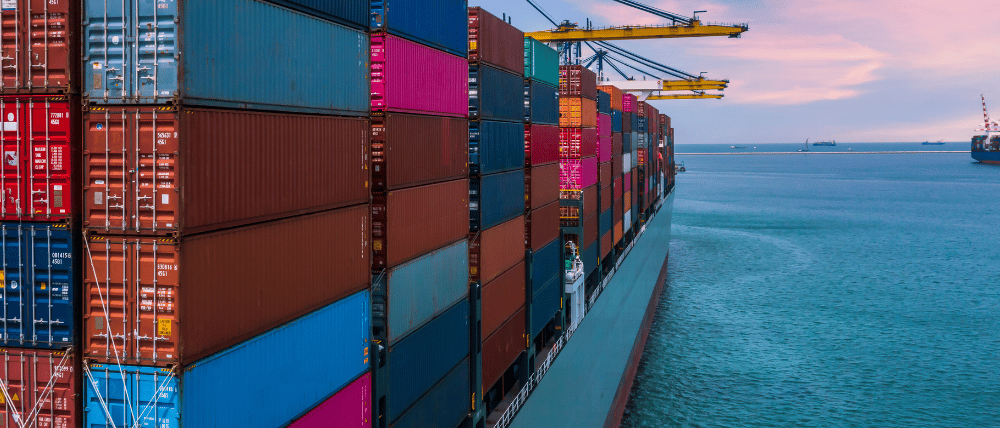
Over the past two decades, international waste trade has undergone significant changes, both in terms of volumes and destination countries. According to the European Commission, EU waste exports to non-EU countries increased by 72% between 2004 and 2023, reaching 35.1 million tonnes.
However, this evolution has not been uniform. The plastic and paper waste markets, historically linked to Asian demand, have undergone a major restructuring, while metal waste flows have followed different trade patterns.
During the 2000s and much of the following decade, China was one of the main international destinations for recyclable waste, particularly paper and plastic.
In 2016, the European Union exported approximately 1.4 million tonnes of plastic waste and more than 5 million tonnes of paper waste to China.
However, conditions for accessing the Chinese market began to tighten years before the sharp decline in trade. In 2013, the Chinese authorities introduced restrictions under the Green Fence policy, aimed at limiting imports of mixed or contaminated waste.
In 2017, the National Sword policy introduced further restrictions. China notified the World Trade Organization of a ban on imports of 24 categories of solid waste, a measure that came into force on 1 January 2018. Stricter limits on impurities in certain waste streams were also subsequently introduced.
The impact on European exports was immediate. According to Eurostat, EU plastic waste shipments to China fell from 1.4 million tonnes in 2016 to just 50,000 tonnes in 2018 and 14,000 tonnes in 2019.
For paper waste, exports fell from more than 5 million tonnes in 2016 to fewer than 700,000 tonnes in 2019.
In just three years, China ceased to be a key destination market for a substantial proportion of the recyclable waste exported by Europe.
China's restrictions triggered a redistribution of trade flows towards other countries, mainly in Asia, as well as Turkey.
In 2019, Malaysia accounted for 24% of European plastic waste exports, followed by Turkey at 17% and Indonesia at 6%.
The paper waste market evolved differently. India received 19% of European exports, Indonesia 17%, Turkey and China 12% each, and Vietnam 11%.
However, the loss of the Chinese market did not simply result in a change of destinations. It coincided with a reduction in international trade in these materials.
Between 2016 and 2019, EU plastic waste exports to non-EU countries fell from 2.6 million to 1.5 million tonnes. Paper waste exports declined from 7.4 million to 5.8 million tonnes.
The transformation of the market was therefore twofold. Destination countries changed, and export volumes fell for certain waste streams.
Alongside China's declining importance in the paper and plastic waste markets, Turkey consolidated its position as the main destination for total EU waste exports.
In 2022, Turkey received 12.4 million tonnes, accounting for 39% of EU waste exports to non-EU countries.
Of the 12.4 million tonnes received in 2022, 10.7 million tonnes consisted of ferrous metal waste, used as secondary raw materials in the steel industry.
In fact, Turkey received 60% of all EU ferrous scrap exports that year.
The European Union recycles a significant proportion of its waste, although it continues to rely on international markets to manage certain materials. Eurostat data helps put both aspects into perspective.
In 2024, the EU generated 2.196 billion tonnes of waste, including mineral waste from activities such as construction and mining. That same year, 42% of waste treated in the EU was recycled, while 13.3% underwent backfilling operations and 6.5% was used for energy recovery. Meanwhile, 37.8% underwent disposal operations.
Historical trends show progress: between 2004 and 2022, the amount of waste recovered through recovery operations in the EU increased by 40.6%, while the amount sent for disposal fell by 25.1%.
However, recycling within Europe coexists with substantial international waste trade. In 2025, the EU exported approximately 32 million tonnes of waste to non-EU countries, of which around 40% went to countries outside the OECD.
International waste shipments may also be intended for recovery at facilities in other countries. Eurostat's waste treatment statistics include waste imported into and treated within the EU, but exclude exported waste.
Another indicator helps put the circularity of the European economy into context: in 2024, only 12.2% of the materials used in the EU came from recycled materials, according to Eurostat.
Therefore, although Europe has increased waste recovery, there is still considerable scope to improve the reintegration of secondary materials into production processes.
The transformation of the market continues. According to data published by the European Commission in September 2026, the EU exported approximately 32 million tonnes of waste in 2025, of which around 40% went to countries outside the OECD.
In the case of plastic waste specifically, exports reached approximately 1.4 million tonnes.
Turkey was the main destination, receiving 510,000 tonnes, followed by Malaysia (276,000), Indonesia (215,000) and Vietnam (137,000).
This distribution is particularly relevant in light of the EU's new regulatory framework.
Regulation (EU) 2024/1157, whose main provisions began to apply on 21 May 2026, strengthens the supervision of waste shipments and the requirements designed to ensure their environmentally sound management.
From 21 November 2026, exports of plastic waste to non-OECD countries will be prohibited, initially until May 2029. In addition, from 21 May 2027, new general restrictions will apply to exports of non-hazardous waste to these countries, with exceptions subject to their demonstrating sufficient capacity to manage the waste in an environmentally sound manner.
The Regulation also strengthens exporters' obligations regarding the verification of receiving facilities, including independent audits in the circumstances specified.
The developments of the past twenty years demonstrate that international waste trade does not depend solely on the supply of and demand for recoverable materials. It is also shaped by the environmental and trade decisions of receiving countries and, increasingly, by the guarantees required regarding waste treatment.